
Top-rated independent heating and cooling across central Arkansas and the Arkansas River Valley
Should You Close Vents in Rooms You Don't Use?
You have a spare bedroom nobody sleeps in, and closing that vent seems like free money. We hear it every week. The short answer is leave the vents open. Closing them raises pressure inside your duct system, pushes air out through leaks in hot attics, and makes your AC and furnace work harder for less comfort in the rooms you actually use.
Call (888) 365-6280- A real person answers
- Open 7 days
- Written quote before work starts
Taking calls until 5:00 PM CT
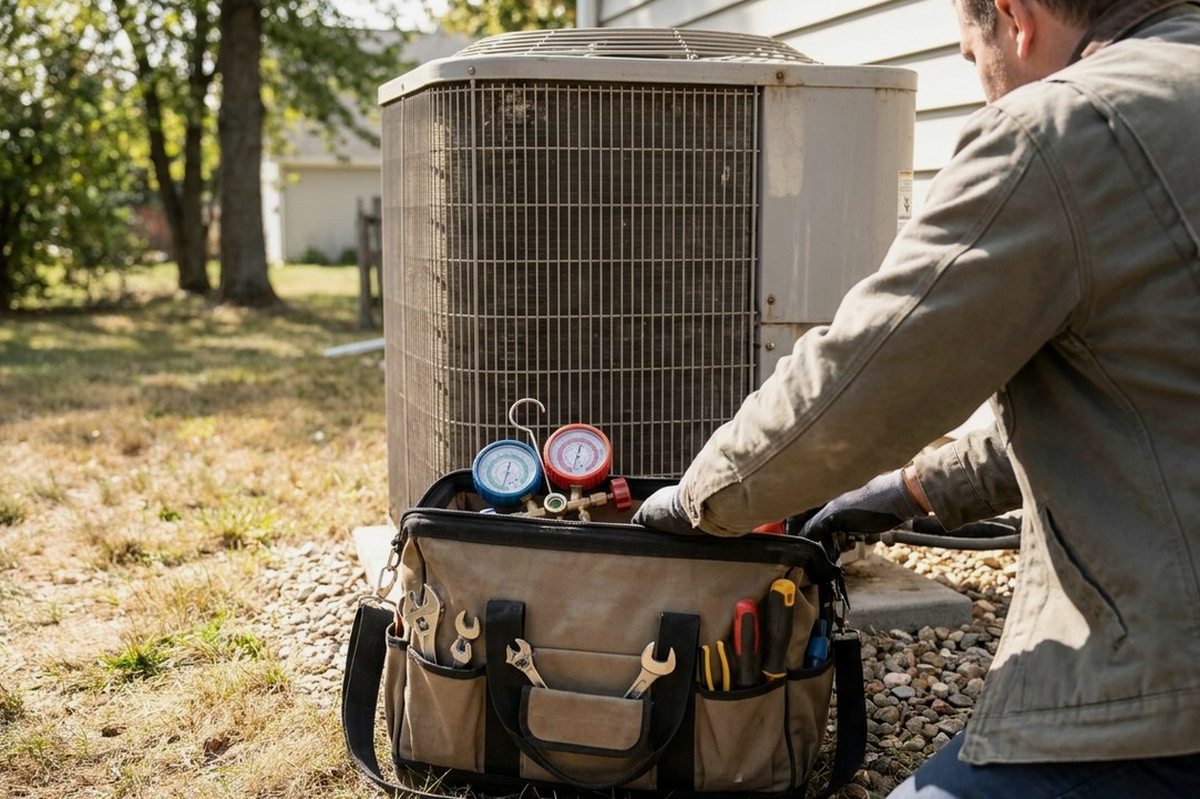
Rock City Air Systems service team · field-reviewed before publishing
What Closing Vents Actually Does to Your System
Your blower moves a set amount of air no matter how many vents are open. Close two or three and that air has nowhere to go, so static pressure climbs. Higher pressure means the blower strains, airflow across the indoor coil drops, and the coil can get cold enough to ice over in cooling season. In heating, a gas furnace can trip its high limit switch and short cycle. Over months that shows up as a burned out blower motor, a cracked heat exchanger on older equipment, or a compressor that fails early. None of that is cheap, and all of it starts with a closed register.
Closed Vents and Duct Leaks Are a Bad Pair
Most homes across Arkansas, Louisiana, Missouri, Mississippi, Oklahoma, Tennessee and Texas have ductwork running through the attic. In mid-century houses that duct is often old, taped with material that gave up years ago, and sitting in an attic that hits well over a hundred degrees in July. Duct seams leak. When you close vents and raise pressure, more of your conditioned air escapes through those seams instead of reaching your rooms. You pay to cool the attic. In humid weather it works the other direction too, pulling damp attic air into the return side, which is why some houses feel sticky even when the thermostat is satisfied.
The Simple Habit: Walk the House and Open Everything
Twice a year, once before cooling season and once before heating season, walk every room and check every supply register and return grille. Open the louvers all the way. Move furniture, rugs and curtains off them. A bed pushed against a wall register or a bookcase over a return does the same thing a closed vent does. Check closets and hallways, since those registers get shut and forgotten. While you are walking, change the filter and note any room that felt off last season. That walk takes ten minutes and prevents the airflow problems that cost real money later.
If One Room Is Always Wrong, That Is a Design Problem
Closing vents is usually an attempt to fix a room that runs hot or cold. Shutting registers elsewhere rarely fixes it and often makes the whole house worse. The real cause is normally undersized duct to that room, a long run through a hot attic, a crushed flex line, or a return path that is blocked when the door is shut. Those are fixable. We can measure airflow room by room, check static pressure at the equipment, and tell you whether the answer is duct repair, a proper balancing damper in the trunk line, or a zoning setup. Balancing dampers belong in the ductwork, not at the register face.
Warning Signs the Damage Has Already Started
Watch for ice on the refrigerant line or the indoor coil, a system that runs and runs without reaching the setpoint, whistling at registers, or a furnace that lights and shuts off again within a couple of minutes. Rooms that stay humid, higher than normal runtime, and a blower that sounds louder than it used to all point at restricted airflow. If you smell gas or your carbon monoxide alarm sounds, get everyone out of the house first, then call 911 or your gas utility from outside, then call us. For everything else, open the vents, change the filter, and if it does not improve in a day call us for air conditioning repair or heating repair.
Should You Close Vents in Rooms You Don't Use? — common questions
Is it ever okay to close a vent?
Slightly closing one register to nudge airflow toward another room is usually harmless. Fully shutting several, or closing off a whole room, is where problems start. If you need real balance, dampers in the ductwork are the right tool.
Should I close the vent in an unheated garage or storage room?
If that space has no supply vent to begin with, leave it alone. If it does have one, call us before shutting it. Some spaces need a little conditioned air to control moisture and protect pipes.
Will closing vents lower my energy use?
No. The blower moves the same air and pressure rises, so more air leaks out of attic ductwork. Runtime usually goes up, not down, and you risk a frozen coil or a strained blower motor.
How it works
- Step 1
Tell us the symptom
Call or fill out the quote form and describe what the system is doing. Warm air, short cycling, water on the floor, a smell, a noise. That detail tells us what parts to load on the truck.
- Step 2
We diagnose on site
A technician checks the thermostat, the electrical side, airflow through the filter and coil, refrigerant behaviour and the ductwork. You hear what we found in plain language before anything gets replaced or repaired.
- Step 3
You approve the fix
We explain the repair, what it costs and what happens if you wait a season. Nothing gets done without your go-ahead, and we tell you honestly when a repair no longer makes sense.
- A real person answers
- Open 7 days
- Written quote before work starts
Why homeowners call us
- We know humid-climate systemsAcross the region the real enemy is moisture. Systems here run long hours pulling water out of the air, and that shows up as frozen coils, clogged drains and mildew smells. We diagnose for humidity, not just temperature.
- Mixed gas and heat pump workPlenty of homes we visit run a heat pump with gas backup, and the two have to hand off cleanly. We troubleshoot both sides, including defrost boards, reversing valves, ignitors and heat exchanger concerns.
- Attic ductwork is our daily breadMid-century homes often have ducts running through attics that hit brutal temperatures. Crushed runs, disconnected boots and leaking joints steal cooling before it reaches the room. We find them instead of blaming the equipment.
- Repair before replaceA capacitor, a contactor, a blower motor or a clogged drain line fixes a lot of the calls we take. We would rather fix what you have and tell you plainly when the numbers stop working.
- All major brands, gas & electricFrom Carrier and Trane to Lennox, Goodman, Rheem and Bryant, serviced independently.
- Straight answersNot worth fixing? We say that out loud, and often it saves you the visit fee.
About this guide
Past the safe checks, it's a job for tools and a meter
Describe what you found and we'll take it from there. Booking takes about a minute.
- A real person answers
- Open 7 days
- Written quotes
- All major brands
- Gas & electric
Rather not call? Get a free quote →