
Top-rated independent heating and cooling across central Arkansas and the Arkansas River Valley
Heating Season Prep, Step by Step
The first cold snap always feels the same. You bump the thermostat up, hear the system kick on, and get a lungful of dusty air that smells like something burning. Or you get nothing at all. We handle heating repair and furnace repair for homeowners across Arkansas, Louisiana, Missouri, Mississippi, Oklahoma, Tennessee and Texas, and this guide covers what is worth checking before that first cold night.
Call (888) 365-6280- A real person answers
- Open 7 days
- Written quote before work starts
Taking calls until 5:00 PM CT
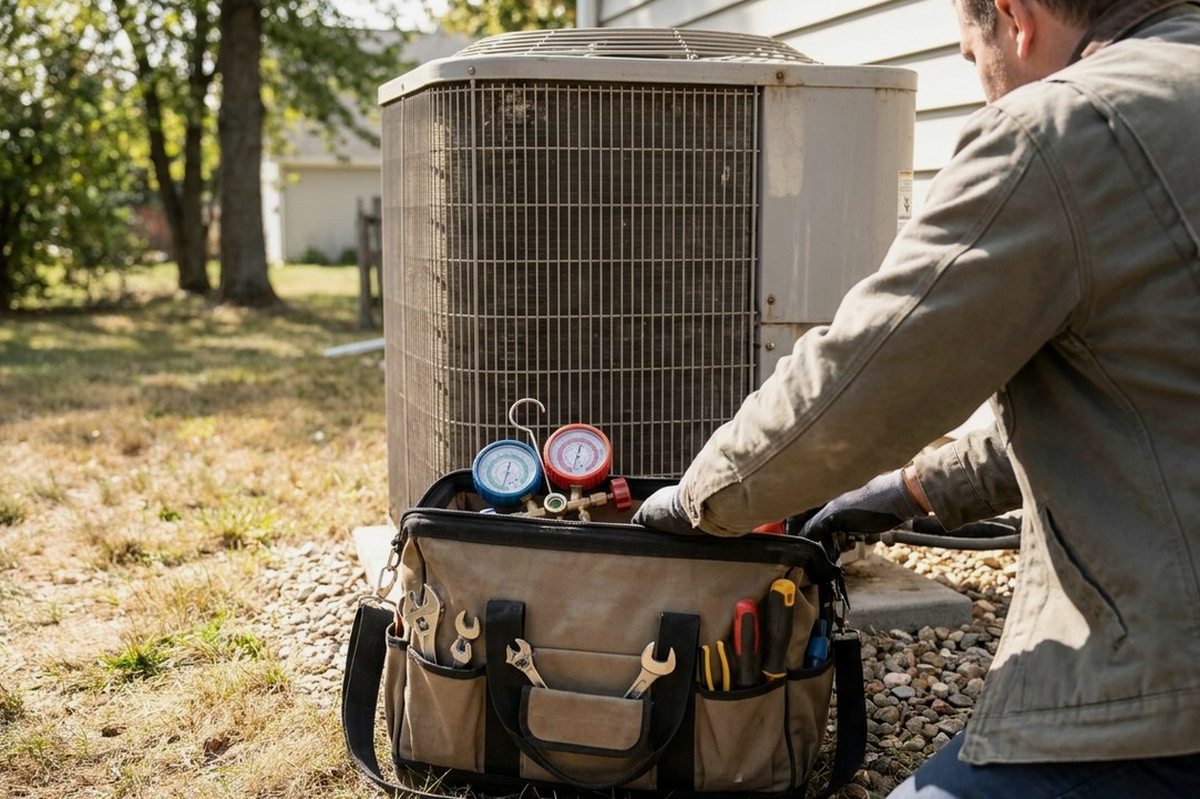
Rock City Air Systems service team · field-reviewed before publishing
What the off-season does to a heating system
Your heat sat idle through months of humidity. That matters more across our region than it does up north. Moisture settles on heat exchangers, burner assemblies and flame sensors, and a thin film of corrosion or soot builds up where you cannot see it. Blower wheels collect a layer of dust that throws them out of balance. Rodents and wasps find their way into flue pipes and outdoor heat pump cabinets. In homes where the ductwork runs through an attic, summer heat cycles have been working on the tape and mastic at every joint all season. None of that shows up until the day you ask for heat.
Which failures spike, and when
The pattern is predictable. The first genuinely cold weekend brings ignition problems: dirty flame sensors, weak hot surface igniters, systems that light and then shut down after a few seconds. That is the single most common call we take in late fall. A few weeks into the season, once the heat has been running daily, the blower motor and capacitor failures start. On heat pumps, the calls shift to defrost board and reversing valve trouble during the first stretch of near-freezing nights with rain, which is most of the winter in the lower part of our service area. Frozen condensate lines and cracked drain traps come with hard freezes.
The checks you can safely do yourself
Keep it to five things. Change the filter, and note the size so you are not guessing next time. Check your thermostat batteries and confirm it is set to heat with the fan on auto, since a dead screen looks like a dead system. Look at the breaker panel for anything tripped, and reset it once. Walk the house and make sure supply and return vents are open and not blocked by furniture or rugs. If you have a heat pump, clear leaves, mulch and grass clippings away from the outdoor unit so it can breathe and drain during defrost cycles. Anything involving gas, refrigerant or wiring is ours.
Signs that mean call before winter, not during
A burning smell that lasts more than the first ten or fifteen minutes of the first run is worth a call. So is a system that ignites and shuts off repeatedly, a blower that squeals or rattles, a rising utility bill with no change in habits, or rooms that were noticeably colder than the rest of the house last winter. Yellow or lazy burner flames instead of steady blue, water around the base of the unit, or a thermostat calling for heat with nothing happening all belong on the list. Getting these looked at in October means you are not waiting on a part during a cold snap.
If you smell gas or suspect carbon monoxide
Leave the building immediately. Do not flip switches, do not use the thermostat, and do not go looking for the source. Once everyone is outside and away, call 911 or your gas utility from a safe distance and let them clear the property. Call us after that and we will handle the diagnosis and heating repair. The same applies if a carbon monoxide alarm sounds or if anyone in the house has unexplained headaches, nausea or dizziness that improves when they go outdoors. Working carbon monoxide alarms on every floor and near sleeping areas are the cheapest protection you can have in a home with gas heat.
Heating Season Prep, Step by Step — common questions
How early should I run the heat for the first time?
Run it for twenty or thirty minutes on a mild day in early fall, before you actually need it. If something is wrong, you find out with the windows open and time to schedule a repair instead of during the first freeze.
Why does my heat smell like burning when it first comes on?
Usually dust burning off the heat exchanger after months of no use, and it should clear within ten or fifteen minutes. If the smell lasts longer, smells acrid or electrical, or returns each cycle, shut the system off and call us.
Do heat pumps need a pre-season check too?
Yes. Heat pumps run harder in winter than summer across most of our service area, and defrost problems, weak auxiliary heat and low airflow all show up in cold weather. Clear debris from the outdoor unit and have the system looked at.
How it works
- Step 1
Tell us the symptom
Call or fill out the quote form and describe what the system is doing. Warm air, short cycling, water on the floor, a smell, a noise. That detail tells us what parts to load on the truck.
- Step 2
We diagnose on site
A technician checks the thermostat, the electrical side, airflow through the filter and coil, refrigerant behaviour and the ductwork. You hear what we found in plain language before anything gets replaced or repaired.
- Step 3
You approve the fix
We explain the repair, what it costs and what happens if you wait a season. Nothing gets done without your go-ahead, and we tell you honestly when a repair no longer makes sense.
- A real person answers
- Open 7 days
- Written quote before work starts
Why homeowners call us
- We know humid-climate systemsAcross the region the real enemy is moisture. Systems here run long hours pulling water out of the air, and that shows up as frozen coils, clogged drains and mildew smells. We diagnose for humidity, not just temperature.
- Mixed gas and heat pump workPlenty of homes we visit run a heat pump with gas backup, and the two have to hand off cleanly. We troubleshoot both sides, including defrost boards, reversing valves, ignitors and heat exchanger concerns.
- Attic ductwork is our daily breadMid-century homes often have ducts running through attics that hit brutal temperatures. Crushed runs, disconnected boots and leaking joints steal cooling before it reaches the room. We find them instead of blaming the equipment.
- Repair before replaceA capacitor, a contactor, a blower motor or a clogged drain line fixes a lot of the calls we take. We would rather fix what you have and tell you plainly when the numbers stop working.
- All major brands, gas & electricFrom Carrier and Trane to Lennox, Goodman, Rheem and Bryant, serviced independently.
- Straight answersNot worth fixing? We say that out loud, and often it saves you the visit fee.
About this guide
If the safe checks didn't fix it, the fault is real
Tell us what you tried and what it did. The booking itself takes a minute.
- A real person answers
- Open 7 days
- Written quotes
- All major brands
- Gas & electric
Rather not call? Get a free quote →